what causes a dog to shake his head
You're lying in bed after a long day at work, trying to fall asleep. Just as you beginning to drift off, yous're startled awake by the jingling of collar tags equally your canis familiaris shakes his head. Later on shaking for a few seconds, your domestic dog finally settles downwardly, so practice you… until the adjacent circular of head shaking starts upwards again.
This pattern repeats once again and once again, every few minutes. As the dark wears on, your annoyance turns to concern and you begin to worry virtually what could be causing this beliefs.
Read on to learn more about why dogs shake their heads, and what you can do to assist.
Why Do Dogs Shake Their Heads?

Dogs shake their heads for a variety of reasons, and it isn't always an aberrant behavior. In some contexts, caput shaking is completely anticipated and expected. Many dogs shake their heads when they commencement wake up, but like we tend to stretch when we go out of bed.
Dogs likewise tend to shake their heads when they're playing with a toy or excited. Some dogs even practise a full-body milkshake, starting at the head and extending all the way forth the body to the tail. They might also shake their heads if they get wet from a bath or from swimming. An occasional shake of the head is zippo to exist concerned most.
Excessive head shaking, however, often has an underlying medical cause. If your dog is repeatedly and frequently shaking their caput, particularly if this is a alter from their normal behavior, it'due south important to determine the cause of their abnormal head shaking.
Why Does My Dog Keep Shaking His Head? v Potential Reasons
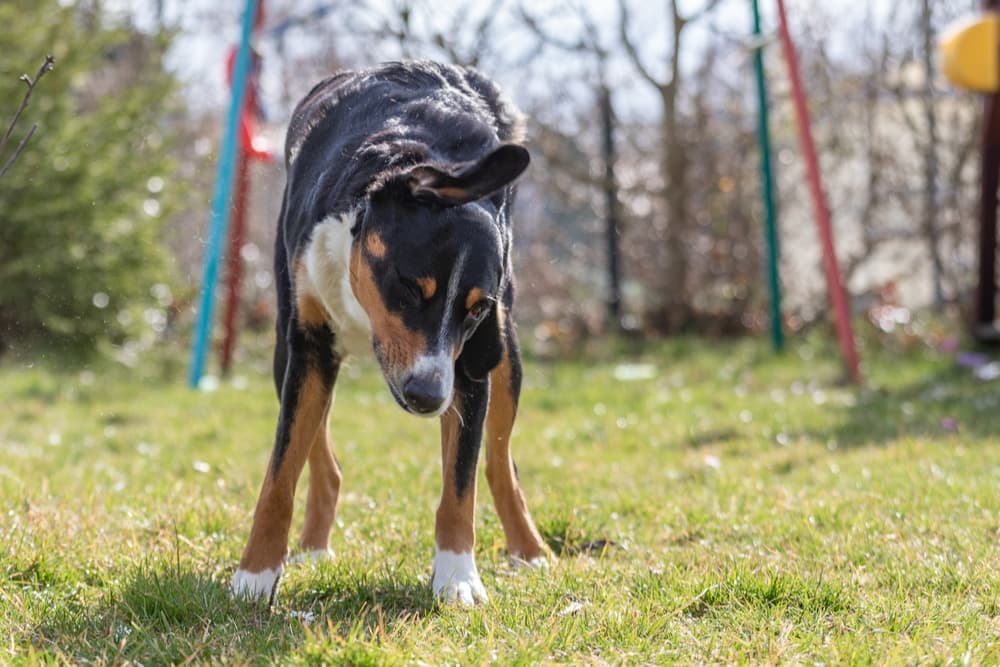
The almost common cause of abnormal head shaking in dogs is inflammation of the ears, called otitis. There are several potential causes of otitis, each of which differ in their handling and long-term management. Allow'southward explore them further.
Ear Infection
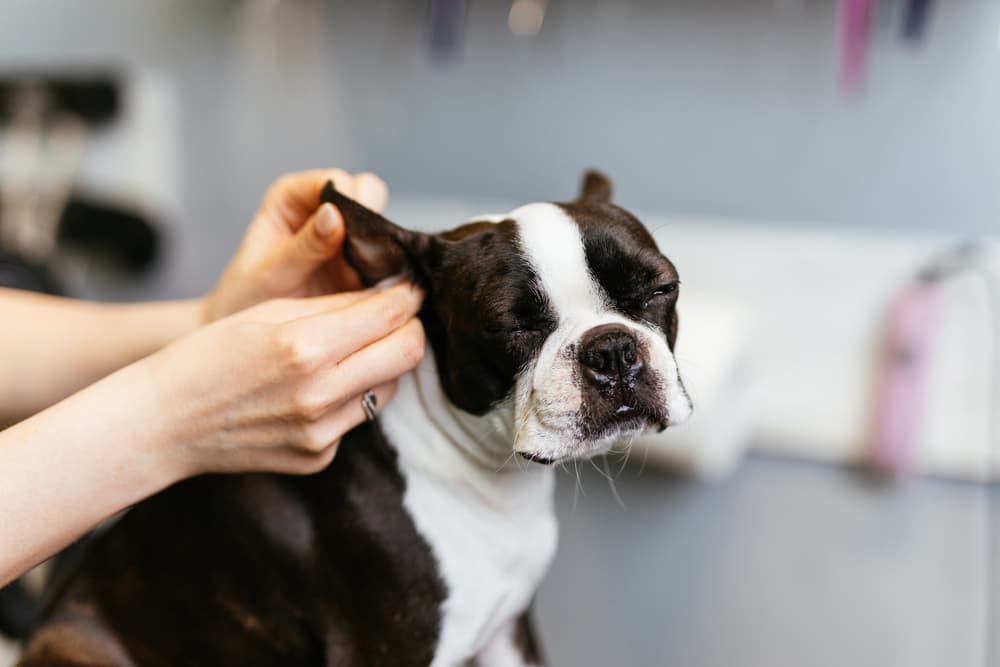
Ear infections are a relatively common trouble in dogs. They occur when bacteria or yeast (which are always present in the environment) proliferate to an excessive level within the ear canal. Infection tin can occur in the inner, centre, or external ear canal, although infections of the external ear canal (otitis externa) are the well-nigh common in dogs. Factors that may predispose a domestic dog to develop otitis externa include excessive moisture in the ear canal, allergies, and endocrine disease (such every bit hypothyroidism).
Ear Mites

Ear mites can cause inflammation of the ears, but they are really relatively uncommon in adult dogs. They are more common in puppies, specially those housed in a crowded situation that promotes close contact with other dogs. Ear mites are microscopic parasites that live within the ear canal, causing severe irritation and discomfort for affected dogs.
Foreign Torso

Strange objects, such as grass seeds, occasionally find their way into a dog's ear canal. If this occurs, they may cause meaning irritation and inflammation, causing a dog to shake their head and show other signs of discomfort.
Ear Trauma

Any wound to the ear can cause irritation and caput shaking. Trauma can have an external source (such as a bite wound from another dog), or it may be caused by cocky-trauma (a dog that scratches their ear and causes an injury with their toenail).
Allergic Otitis
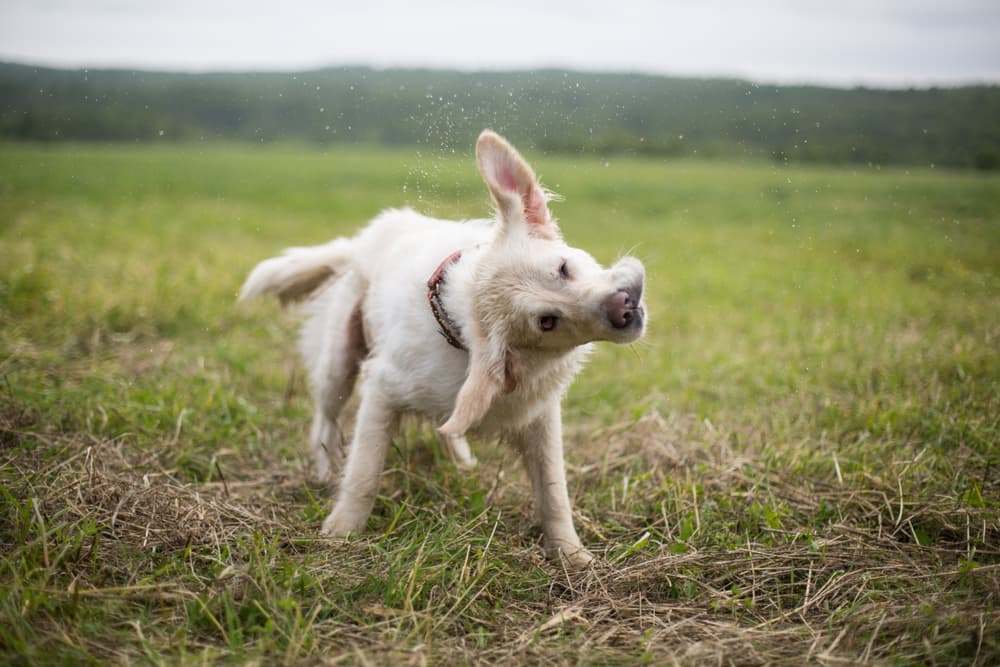
If a dog is shaking their head with no ear infection or other visible abnormalities, allergies may be to blame. Many dogs are allergic to inhaled allergens, such as tree pollen, weeds, grasses, mold, etc. Other dogs are allergic to proteins within their nutrient, such every bit beef or chicken. Both types of allergies can lead to inflammation within the ear canals.
Other Causes of Dog Caput Shaking

While ear infections, ear mites, foreign bodies, ear trauma, and allergic otitis are certainly the most common causes of head shaking in dogs, there tin be other causes.
Any affliction that affects the ear, including rare autoimmune disorders and generalized skin bug, tin can lead to shaking of the caput.
In rare cases, your domestic dog'south head shaking may fifty-fifty take a cause other than ear or skin illness. Determining the cause of your domestic dog's head shaking requires a thorough veterinarian workup.
What to Do if Your Dog Keeps Shaking His Head

A new onset of persistent caput shaking in a dog should prompt a visit to the veterinary. You don't necessarily need to rush to the emergency veterinary right away, because a single episode of caput shaking could have a mild cause (like an insect bite). If the caput shaking persists, however, yous will desire to have your canis familiaris examined within the next 1 to 2 days.
A dog that shakes their head forcefully and for a prolonged period of fourth dimension can actually impairment their ear. Claret vessels in the ear tin burst, filling the pinna (ear flap) with blood and resulting in a condition called an aural hematoma (ear hematoma). The pinnae can besides become damaged by the forcefulness with which they hit your dog's caput and neck, leading to scabs and wounds on the ears.
If your dog'southward head shaking is acquired by an ear infection, early on treatment is more effective and will lead to more rapid resolution. Delaying handling will non only prolong your dog'south discomfort, it could also make your dog's ear infection more than challenging and expensive to treat.
Canis familiaris Shaking Head: Diagnosis and Treatment

Your veterinarian will probable brainstorm by performing a thorough concrete exam, looking for whatsoever other signs of illness or disease. Adjacent, your veterinary volition focus on your dog'south ears. They volition thoroughly examine your dog's pinnae (external ear flaps), looking for wounds, inflammation, and other abnormalities. Side by side, they will perform an otoscopic exam, in which an otoscope (an instrument designed to let evaluation of the ear canal) is used to provide a magnified view of your dog'due south ear canals and ear pulsate. The otoscopic exam will allow your veterinary to look for inflammation of the ear canals, droppings in the ear canals, and whatsoever abnormalities associated with the eardrum.
If your veterinary sees whatsoever evidence of otitis or otherwise suspects a condition affecting your domestic dog's ears, an ear cytology will likely be recommended. This test involves removing a small-scale sample of debris from the ear canal with a cotton swab, and and so examining that debris nether the microscope. An ear cytology can tell your veterinarian whether your dog has ear mites, a bacterial infection, or a yeast infection within the ears. If inflammatory cells are found in the absence of an infection, this can suggest the presence of allergic inflammation.
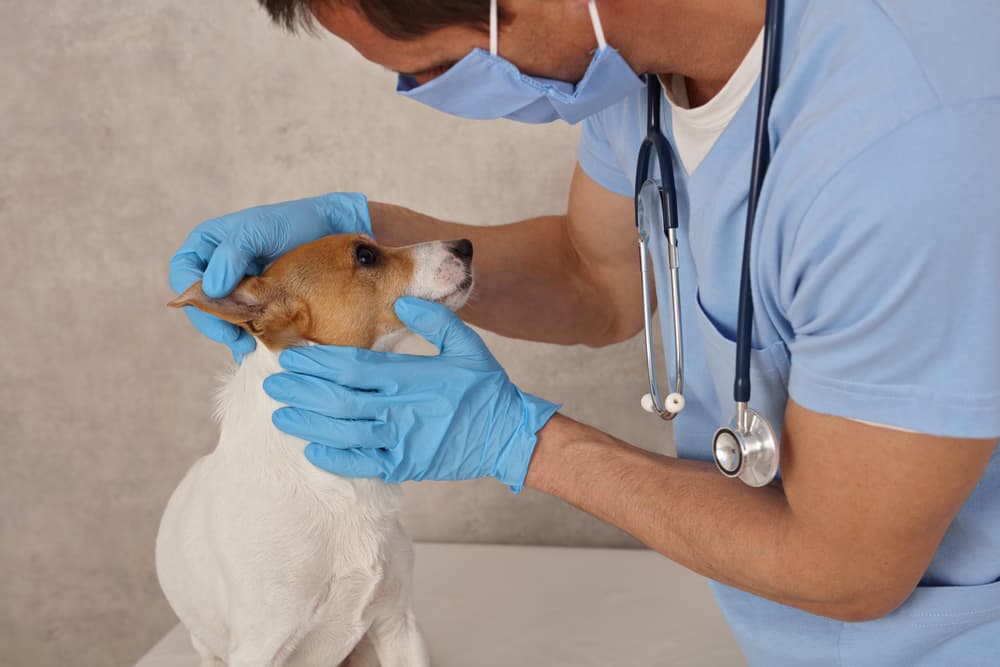
Once your veterinary has determined the cause of your dog'due south ear inflammation, handling will be prescribed. Most ear infections are treated with prescription ear cleaners and topical medications. Oral medications may as well be prescribed, especially in dogs with underlying allergies.
Some topical medications are applied by a veterinary in the veterinary clinic. This alleviates the hassle of you having you lot medicate your dog's ears at home, but requires you to return for follow-upward treatments every i to two weeks until the infection has resolved. Other treatments are designed to be administered past a dog's owner at home, once or twice daily. Your veterinarian volition talk to about which treatment is all-time for your canis familiaris, and give you instructions for completing your domestic dog'south course of treatment. If necessary, a veterinarian technician may demonstrate how to clean and medicate your dog'due south ears. A recheck appointment will probable be scheduled, so your veterinarian can ensure that the infection has resolved.
If your canis familiaris's otoscopic exam and ear cytology practise not show whatsoever evidence of otitis, your veterinarian will talk to you lot about farther recommended testing to determine the crusade of your dog'southward head shaking.
Related Weather condition
- Otitis externa
- Ear mites
- Aural/ear hematoma
Source: https://www.greatpetcare.com/dog-behavior/why-do-dogs-shake-their-heads/

Post a Comment for "what causes a dog to shake his head"